
Whole-Body MRI and the Future of Preventive Healthcare in the Philippines: Advanced Imaging for Early Detection at St. Luke’s Medical Center
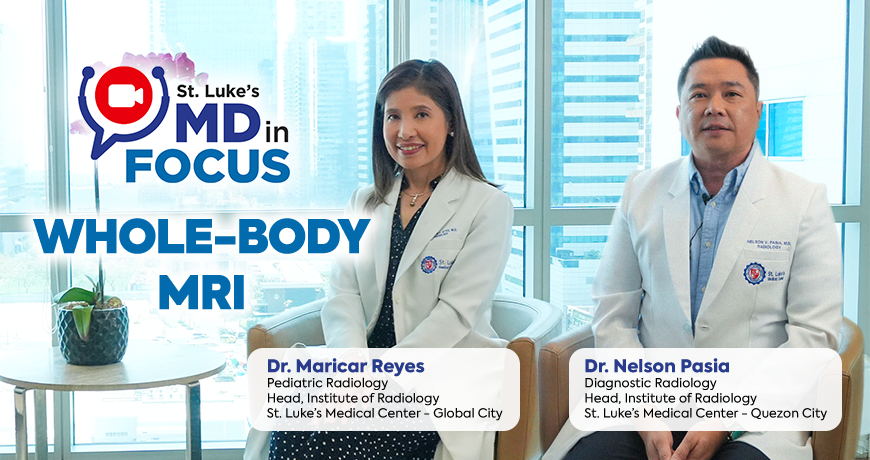
In modern healthcare, the strongest treatment is not a cure—it is prevention. As medical science continues to evolve, the focus is shifting from reactive treatment to proactive health management powered by advanced diagnostic technology. At the forefront of this transformation is St. Luke’s Medical Center, redefining preventive care in the Philippines through whole-body MRI scanning, advanced medical imaging, and early disease detection technologies.
In a recent discussion on MD in Focus, Dr. Maricar Reyes and Dr. Nelson Pasia emphasized a powerful message: health is no longer just about treating symptoms—it is about detecting silent diseases before they begin to show signs.
“The thrust of modern medicine now is really towards health prevention, and investing in good medical examination would really be high value for money for our patients,” shares Dr. Maricar Reyes.
This reflects a growing global trend in preventive healthcare, in which individuals are encouraged to undergo comprehensive health screening, even when they feel well. The goal is simple yet powerful: identify risks early, improve outcomes, and extend healthy lifespan.
At St. Luke’s, preventive care is enhanced through advanced imaging diagnostics, including MRI (Magnetic Resonance Imaging) and whole-body MRI screening, which detect abnormalities long before symptoms appear.
What Is Whole-Body MRI and Why Does It Matter in Preventive Health Screening?
According to Dr. Nelson Pasia, Head of St. Luke’s Quezon City Institute of Radiology, “A Magnetic Resonance Imaging (MRI) is a medical imaging equipment that has a better resolution for soft tissue structures, so this would include your brain, solid organs, and also the musculoskeletal system, which includes bones, joints, and cartilages. So the concept here is better resolution for soft tissue structures.”
“It's an imaging modality that is considered advanced in a way that it really gets to see what's going on inside your body. And aside from that, it has the added advantage of no radiation, so it's very safe”, shared by Dr. Maricar Reyes, Head of the Institute of Radiology, St. Luke’s Global City.
One of the most significant breakthroughs in modern diagnostic medicine is the whole-body MRI scan, which provides a comprehensive overview of internal health in a single session—helping identify silent conditions such as early tumors, aneurysms, and organ lesions.
Whole-Body MRI vs CT Scan: Understanding the Difference in Diagnostic Imaging
While both CT scans and MRIs are essential imaging tools, they serve different diagnostic purposes.
-
CT Scan (Computed Tomography) is highly effective for:
-
Detecting lung nodules
-
Evaluating trauma cases
-
Rapid emergency imaging
-
Assessing abdominal conditions
-
-
MRI (Magnetic Resonance Imaging) excels in:
-
Soft tissue contrast
-
Brain and spinal cord evaluation
-
Bone marrow and joint assessment
-
Detecting subtle tissue abnormalities
-
Dr. Maricar Reyes explains that these tools are complementary, not competing technologies—each plays a critical role in comprehensive diagnostic imaging and precision medicine.
One of the most groundbreaking offerings in Philippine healthcare today is whole-body MRI screening at St. Luke’s Medical Center, currently available as part of its advanced preventive imaging services.
As Dr. Pasia highlights, “We're the only one in the Philippines who has whole-body MRI, and it's high time for St. Luke's to use these innovations, so as to serve our patients who really want to proactively assess their health.”
This type of preventive diagnostic screening is designed for individuals who:
-
have no symptoms but want a baseline for their health.
-
have a family history of critical illnesses.
-
want early detection of silent diseases.
-
are prioritizing long-term wellness and preventive care.
Whole-body MRI can help detect:
-
Early-stage tumors
-
Small liver or kidney lesions
-
Brain abnormalities
-
Spinal conditions
-
Vascular risks such as aneurysms
One of the key advantages of MRI technology is that it uses no ionizing radiation, making it one of the safest imaging tools available—even for younger patients.
At St. Luke’s, patient experience is prioritized throughout the process:
-
Average scan duration: less than one hour
-
Non-contrast procedure (for whole-body screening)
-
No fasting or complex preparation required
-
Comfortable padded scanning table
-
Noise-reduction headphones or earplugs provided
-
Continuous communication with radiologic technologists
For patients with claustrophobia or anxiety, sedation options and additional support are available to ensure a safe and comfortable experience.
MRI Safety and Eligibility: What Patients Should Know
While MRI is widely safe, certain considerations apply:
-
Some older metal implants may not be MRI-compatible
-
Pacemakers may require specialist coordination.
-
Patients are screened thoroughly before the procedure.
As emphasized by the experts, MRI safety protocols at St. Luke’s Medical Center prioritize patient protection above all else, ensuring every scan is clinically appropriate and safe.
Preventive Imaging vs Wearable Health Technology
With the rise of smartwatches and fitness trackers, many individuals are now more aware of their health metrics. However, wearable technology and medical imaging serve different purposes.
-
Wearables track physiological data (heart rate, sleep, activity levels)
-
Whole-body MRI detects structural abnormalities inside the body.
As Dr. Pasia explains, “Wearables show physiological function, while MRI reveals anatomical or structural conditions such as tumors or aneurysms.”
Together, they create a more complete picture of health—but imaging remains essential for deep diagnostic insight and early disease detection.
No Preparation Needed: Simple, Fast, and Patient-Friendly Screening
For asymptomatic individuals undergoing whole-body MRI:
-
No fasting required
-
No laboratory preparation needed
-
No contrast injection required
-
Removal of metal accessories
This makes it one of the most accessible forms of preventive health screening in the Philippines today.
Who Can Undergo Whole-Body MRI?
Because MRI uses no radiation, it is generally safe for a wide range of patients, including children and young adults—provided they can remain still during the procedure.
-
Recommended for individuals aged 19 and above
-
Younger patients may be accommodated with parental consent.
-
Ideal for proactive health monitoring and baseline assessment
As Dr. Maricar Reyes emphasizes, “The goal is not just to live long, but to live healthier.
This reflects the future of precision medicine, preventive diagnostics, and early disease detection, where healthcare is no longer reactive but proactive.
At St. Luke’s Medical Center, advanced imaging technologies like whole-body MRI are helping redefine what it means to stay healthy—offering patients the opportunity to detect, understand, and act on potential health risks early.
In a world where many diseases remain silent until advanced stages, early detection is one of the most powerful tools in modern medicine.
With whole-body MRI, advanced radiology, and world-class preventive care services, St. Luke’s Medical Center, one of the best hospitals in the Philippines, empowers patients to take control of their health journey—before symptoms begin.
Because in preventive healthcare, knowledge is not just power—it is protection.


