
St. Luke’s Medical Center - Global City Achieves Over 300 TAVR Procedures, Reinforcing Leadership in Minimally Invasive Heart Care
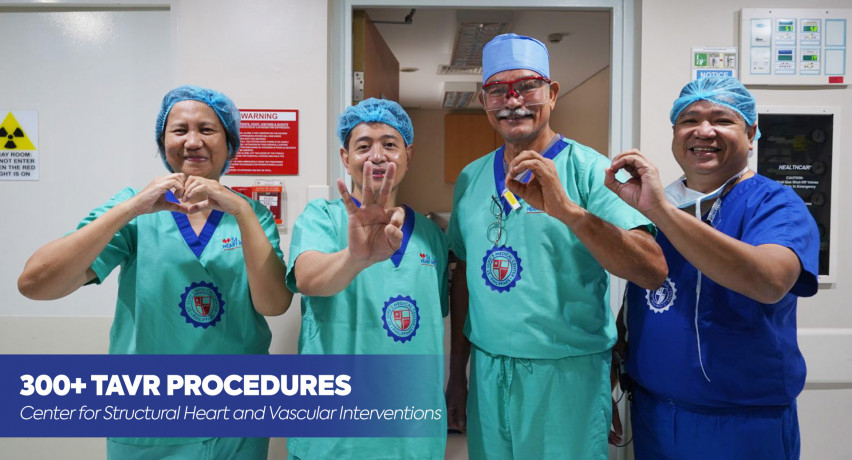
The St. Luke's TAVR Team celebrating their 300th procedure (L-R:) Dr. Ofelia Valencia, Echocardiography Specialist/ Cardiologist;
Dr. Ferdinand Alzate, Interventional Cardiologist; Dr. Fabio Enrique Posas, Head of the Center for Structural Heart and Vascular Interventions; and Dr. Marvin Martinez, Thoracic Cardiovascular Surgeon
TAGUIG CITY, Philippines, January 14, 2026 — St. Luke’s Medical Center - Global City marks a significant milestone for its cardiovascular services, having successfully completed over 300 Transcatheter Aortic Valve Replacement (TAVR) procedures to date.
This achievement solidifies St. Luke’s position as the pioneer and one of the leading providers of TAVR in the country, a journey that began in February 2012 when the hospital introduced the revolutionary technique, where a percutaneous TAVR procedure was performed on an 86-year-old patient. The program is led by Dr. Fabio Enrique Posas, an accomplished interventional cardiologist who pioneered the procedure in the country and continues to push the boundaries of structural heart interventions.
“Reaching our 300th TAVR case is more than just a number; it represents our journey of 300 opportunities to provide life-changing care without the need for traditional open-heart surgery,” said Dr. Posas. “When we started this journey over a decade ago, our goal was to ensure that this kind of advanced intervention would be made available locally, and that no one would have to travel abroad to receive world-class cardiac care. Today, our outcomes remain at par with the best international institutions. It is by far one of the most advanced and experienced cardiac programs in the country.”
TAVR is a minimally invasive procedure designed for patients with severe aortic stenosis—a narrowing of the heart’s aortic valve that restricts blood flow. Unlike traditional surgery, TAVR allows doctors to replace the diseased valve with a bioprosthetic valve through a small catheter, usually inserted via the groin or wrist. This approach eliminates the need for large chest incisions and general anesthesia, resulting in significantly shorter recovery times for patients. TAVR has also proven to be a viable option for elderly or high-risk patients who are ineligible for open-heart surgery.
The 300th milestone follows the recent launch of the St. Luke’s Center for Structural Heart and Vascular Interventions (CSHVI), a dedicated facility equipped with the latest technology to manage complex heart diseases through non-surgical means. Beyond TAVR, the center will soon venture into other minimally invasive cardiac techniques, consistently delivering optimal outcomes of care through expertise, patient-centered therapy, and advanced technologies.
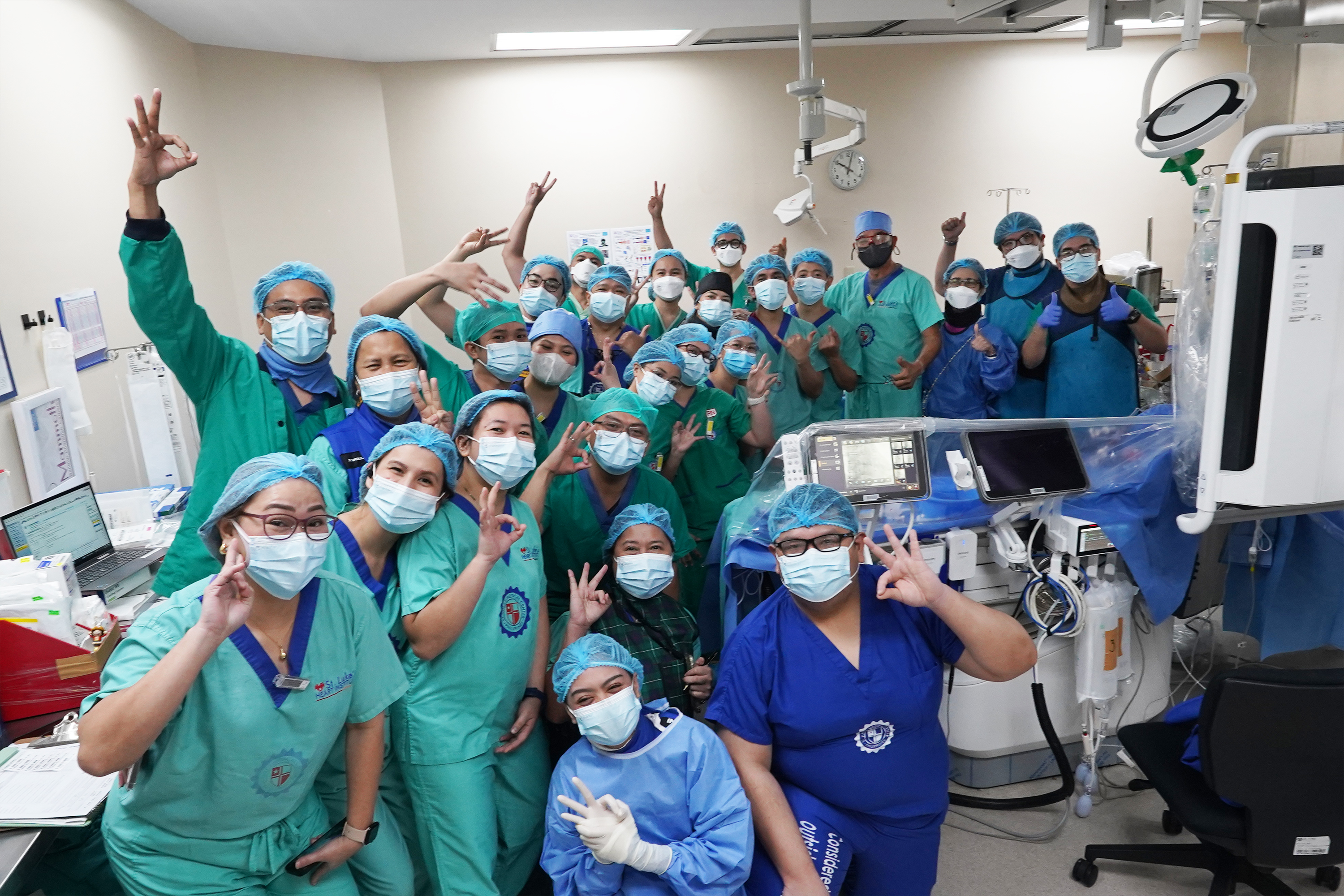
Under the leadership of Dr. Posas and the multidisciplinary structural heart team—which includes cardiac surgeons, anesthesiologists, nurses, and imaging specialists—the CSHVI has established "Systems of Care" which provide patients a seamless TAVR experience from diagnosis to treatment, discharge, and beyond. Dr. Posas shares, "Each unit, from the Heart Institute to the CathLab and the nursing floor, is closely aligned to ensure continuity at every step of the journey. We remain dedicated to this rigorous standard of excellence because every life matters."
“St. Luke’s remains committed to bringing the future of medicine to the Philippines,” added Dr. Dennis P. Serrano, President and CEO of St. Luke’s Medical Center. “The success of the TAVR team is a testament to our mission of delivering patient-centered care through clinical excellence and innovation.”
For more information about TAVR and other cardiovascular services at St. Luke’s Medical Center-Global City, contact the St. Luke's Center for Structural Heart and Vascular Interventions (CSHVI) at (632) 8789-7700 ext. 3021/3025.


