
Inside the Adrenal Ultrasound: A Simple Scan That Can Explain a Complicated Diagnosis
Blood pressure medication is supposed to work. So when it doesn't — when the numbers stay stubbornly high no matter what you cut out or add in — it's natural to start wondering what else might be going on. Sometimes the headaches, the racing heart, the sweating spells that come from nowhere are all part of the same puzzle. And sometimes the missing piece isn't in your heart at all. It's in two glands you've probably never thought about, sitting quietly above your kidneys.
Why Do I Need an Adrenal Ultrasound?
Your adrenal glands make hormones — cortisol, aldosterone — that help keep your blood pressure in check. Most people never think about them, because most of the time they don't need to. But if one of these glands grows a small tumor or starts overproducing, those hormones can spill into your bloodstream and drive your blood pressure up in a way no medication adjustment will fix. The pills aren't wrong. They're just aimed at the wrong target.
This is usually why a doctor brings up an adrenal ultrasound — not as a first-line test, but after blood pressure has proven genuinely hard to manage, or after a blood or urine test has raised a flag. Unexplained headaches, palpitations, sudden sweating, or anxiety that hits out of nowhere often round out the picture.
What Can an Adrenal Ultrasound Detect?
The scan gives your doctor a clear picture of the adrenal glands—their size, shape, and whether anything looks off. It can catch adenomas, small growths that are almost always benign but can still cause trouble by quietly pumping out extra hormone, or one gland looking larger or different than the other.
On its own, though, an ultrasound only tells half the story. It shows what the gland looks like, not what it's doing. That's why the images are almost always read alongside blood or urine hormone tests, so your doctor can connect what's structural with what's actually active.
Adrenal Ultrasound for Adrenal Tumor
If a tumor is suspected, ultrasound is often where the search begins. It's the gentler option — no radiation, nothing invasive — making it a sensible first step before CT scans, MRIs, or biopsies come into play. For many patients, this test finally puts a name to what's been happening in their body, and that alone can be a relief.
How Is It Performed?
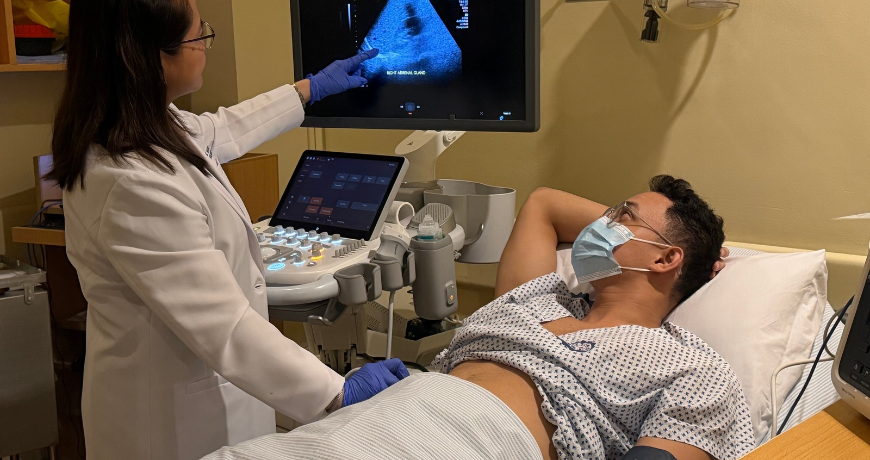
Nothing about this test should make you nervous. You'll lie back on the exam table while a sonographer applies gel over your side and upper abdomen so the probe can glide smoothly and pick up a clear image. From there, it's just gentle pressure and movement while the pictures form on screen in real time. No needles, no sedation, nothing to recover from. Most people are in and out within half an hour and head straight back to their day. A radiologist reviews the images afterward, and your doctor walks you through what they found.
Specialized Diagnostic Care at St. Luke’s
At St. Luke's Medical Center in Quezon City, an adrenal ultrasound is one part of a fuller hypertension workup — the images are considered alongside your hormone levels and history, not in isolation. The goal was never just to take a picture. It's to understand what's actually driving your symptoms.
If your blood pressure has felt like a moving target, or those unexplained episodes keep circling back, it's a fair thing to bring up with your doctor.
For more information about St. Luke’s Medical Center and its services, call our Product Information Hub at 09479930471 / 09399161805 / 09285200239 / 09985822276 or email productinfo@stlukes.com.ph.


