
Advanced Mole Mapping and Hair Trichoscopy for Early Detection and Scalp Care
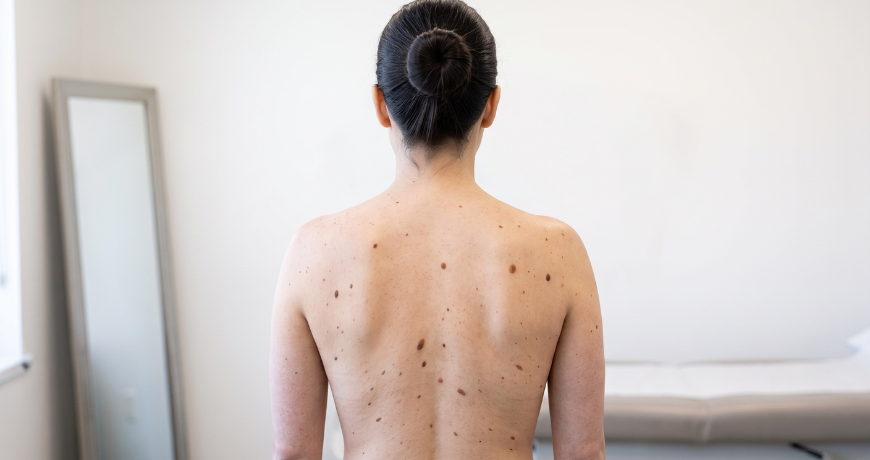
Taking care of your skin involves more than just using the right skincare products or wearing sunscreen daily. One of the most important ways to protect your health is to regularly monitor your skin for changes that may signal a more serious condition.
To help you take a proactive, state-of-the-art approach to dermatological wellness, the Skin Center at St. Luke’s Medical Center utilizes the advanced IntelliStudio system. This cutting-edge imaging technology offers comprehensive diagnostic features, including both Advanced Mole Mapping for skin cancer screening and Hair Trichoscopy for in-depth hair and scalp health evaluation.
How Advanced Mole Mapping Can Help
Early Detection of Skin Changes
Regular imaging allows dermatologists to monitor moles and detect changes early, enabling faster diagnosis and treatment.
Precise Monitoring Over Time
The system creates a digital record of your skin, making it easier to compare images and spot subtle changes.
Personalized Care for Higher-Risk Individuals
This service is especially useful for those with many moles, fair skin, a personal or family history of skin cancer, or significant sun exposure. It provides ongoing, tailored skin monitoring.
Support for Skin Cancer Screening
Mole Mapping helps dermatologists find suspicious lesions for further evaluation. Early detection improves skin cancer outcomes.
Who Should Consider Mole Mapping?
You may benefit from Advanced Mole Mapping if you:
-
have numerous moles or moles that look unusual
-
notice changes in the size, shape, or color of any mole
-
have a personal or family history of skin cancer
-
have fair skin or a history of frequent sun exposure or sunburns
-
want a detailed baseline record of your skin for easier monitoring in the future
Beyond skin monitoring, the IntelliStudio system also features Hair Trichoscopy—an advanced, non-invasive imaging service specifically designed for hair and scalp analysis. Using high-magnification dermoscopy and automated digital analysis, trichoscopy allows dermatologists to assess hair density, hair shaft thickness, and underlying scalp conditions without discomfort.
How Hair Trichoscopy Helps
Detailed Hair and Scalp Analysis
Captures high-magnification images to evaluate follicle density, hair diameter, and scalp health in real time.
Non-Invasive Diagnostic Tool
Performs thorough examinations on unclipped hair, eliminating the need for hair trimming or invasive procedures.
Objective Treatment Tracking
Provides accurate visual and numerical measurements to monitor your hair’s response to growth therapies, treatments, or hair restoration plans over time.
Targeted Care for Hair Loss
Assists dermatologists in identifying causes of hair thinning, shedding, or scalp inflammation (such as androgenetic alopecia or alopecia areata) to guide personalized treatment strategies.
Who Should Consider Hair Trichoscopy?
You may benefit from Hair Trichoscopy if you:
-
Are experiencing hair thinning, patchy hair loss, or excessive daily hair shedding.
-
Notice changes in hair volume, texture, or a receding hairline.
-
Experience persistent scalp redness, itching, scaling, or excess oiliness.
-
Are currently undergoing hair restoration or regrowth treatments and want objective visual progress tracking.
Protecting your skin starts with awareness. By combining advanced imaging technology with the expertise of St. Luke’s board-certified dermatologists, Advanced Mole Mapping offers a more comprehensive way to monitor your skin and support early detection of potential concerns.
For more information about St. Luke’s Medical Center and its services, call our Product Information Hub at 09479930471 / 09399161805 / 09285200239 / 09985822276 or email productinfo@stlukes.com.ph.


