
A New Option for Treating Early Gastrointestinal Tumors Without Major Surgery
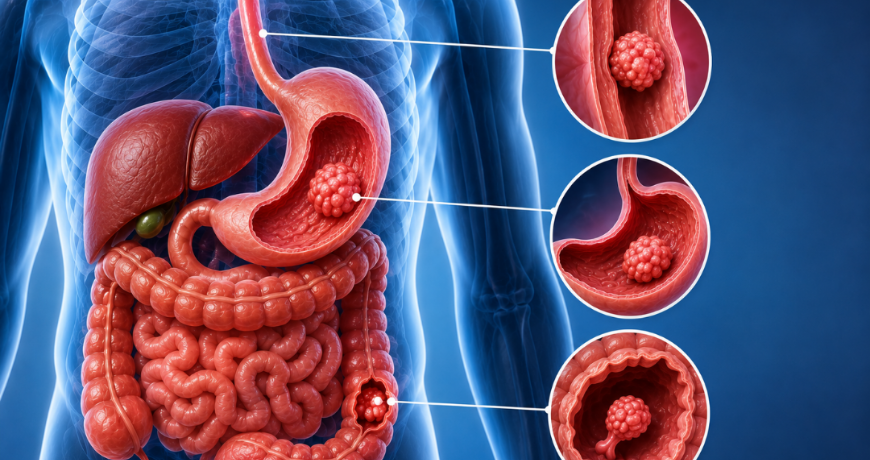
When people are diagnosed with an early-stage gastrointestinal tumor or a precancerous lesion, many immediately worry that they will need major surgery. In the past, treatment for some of these conditions often involved removing part or all of an affected organ, such as the stomach or colon. While these operations can be lifesaving when necessary, they may require a longer recovery and can have a lasting impact on a person’s daily life.
St. Luke’s Medical Center is helping change that paradigm. Through a highly advanced, minimally invasive procedure called Endoscopic Submucosal Dissection (ESD), specialists can remove certain early-stage gastrointestinal tumors completely while preserving the body’s natural anatomy.
To understand how ESD works, it helps to know a little about the structure of the digestive tract. The walls of the esophagus, stomach, and colon are made up of several layers. The innermost layer, called the mucosa, is where most early gastrointestinal cancers and precancerous lesions begin. Just beneath it lies the submucosa—a thin layer that allows specialists to carefully separate and remove the abnormal tissue while preserving the deeper muscle layer and the rest of the organ.
Unlike conventional endoscopic techniques, which may require larger lesions to be removed in several pieces, ESD enables specially trained gastroenterologists to remove the lesion in a single, intact specimen (known as en bloc resection). This allows for a more accurate pathological assessment, helps determine whether the lesion has been completely removed, and reduces the risk of local recurrence.
Because ESD is performed entirely through a flexible endoscope without external incisions, patients generally experience less postoperative pain and a faster recovery compared with conventional surgery. Recovery is often smoother, but ESD remains an advanced therapeutic procedure that requires careful monitoring. As with any medical intervention, potential risks—including bleeding, perforation, or other procedure-related complications—will be thoroughly discussed by the treating physician before treatment. Most patients can gradually return to their normal activities and diet according to their physician’s recommendations and individual recovery.
Early detection, combined with advanced, organ-preserving techniques such as ESD, offers one of the most effective approaches for treating selected early-stage gastrointestinal tumors before they progress. Proper clinical evaluation is the first step.
To learn more about Endoscopic Submucosal Dissection (ESD), please contact the St. Luke’s Product Information Hub at: 0947-9930471 / 0998-5822276 / 0939-9161805 / 0928-5200239 or email productinfo@stlukes.com.ph.


